Available May 2026
JC
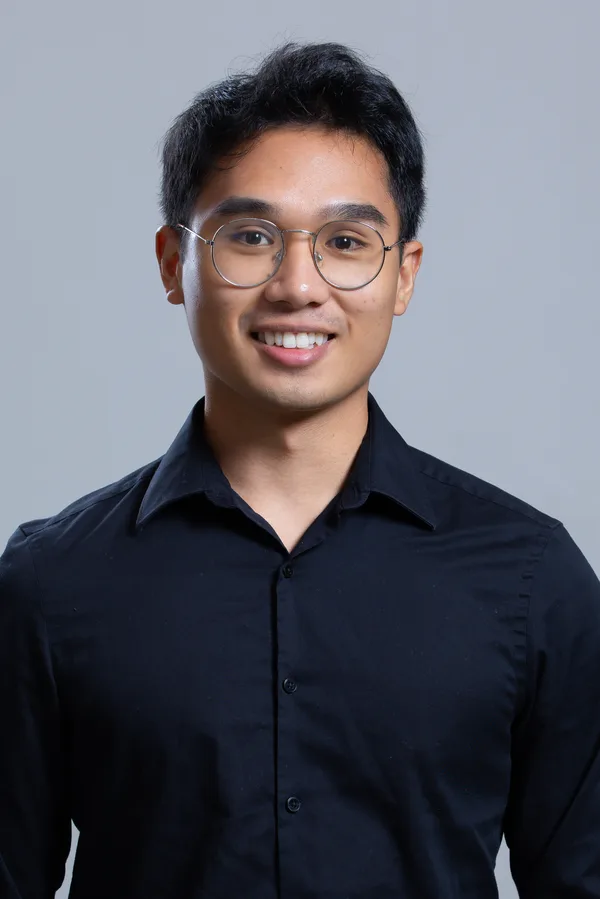
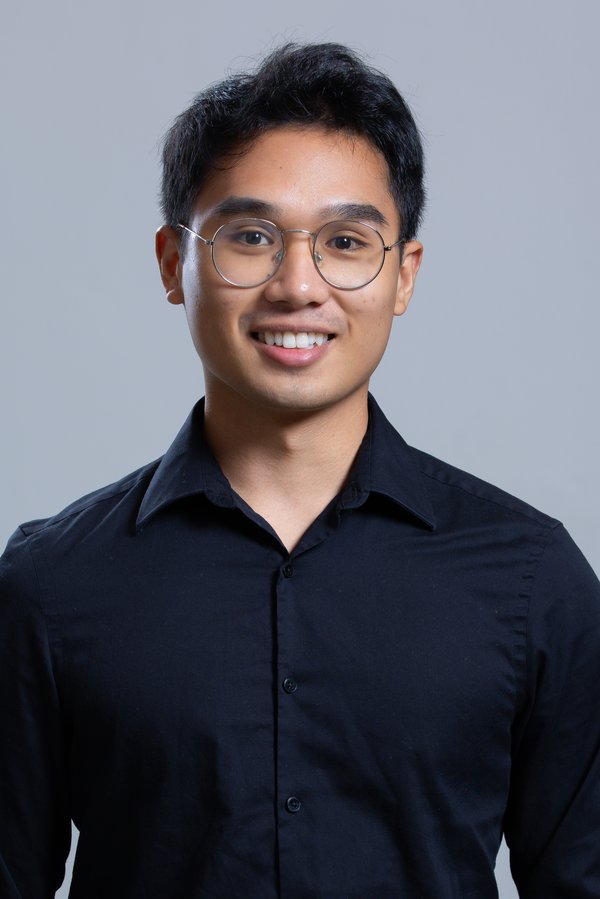
Joneil Caoile
Biomedical Engineer
[sys] Initializing engineer profile...
[edu] M.S. Biomedical Engineering — Stevens LOADED
[exp] 400+ clinical observation hours VERIFIED
[hfe] IEC 62366-1 human factors framework ACTIVE
[dev] UseTrace HFE + PhotoCull AI DEPLOYED
[loc] SoCal medtech — validation / R&D / HF READY
Achievement Unlocked
Evolving...
LVL 27 · Medtech Engineer
0 / 2,026 XP
Currently building UseTrace HFE
Available May 2026 · SoCal

Biomedical Engineer

Joneil Caoile

Two years watching devices fail patients. Now I test them, validate them, and build tools so they don't.

Targeting validation, applications, R&D, and human factors roles in SoCal medtech.

biomedical engineer

Resume ↓
Joneil Caoile, biomedical engineer
$ joneil --role medtech-engineer
QUALIFICATION SUMMARY
EDUCATION
↳ M.S. Biomedical Engineering
Stevens Institute of Technology
EXPERIENCE
↳ 400+ clinical observation hours
↳ 6 medical device projects
↳ IEC 62366-1 human factors
TOOLS BUILT
↳ UseTrace (HFE observation tool)
↳ PhotoCull AI (image classification)
$
$ 
Scroll to explore
IEC 62366-1 (Human Factors)
FDA 21 CFR 820
EU MDR
Design Controls
Usability Testing
V&V Protocols
Risk-Based Testing
Computer Software Assurance
IQ/OQ/PQ
Google UX Certificate
IEC 62366-1 (Human Factors)
FDA 21 CFR 820
EU MDR
Design Controls
Usability Testing

Every medical device has to prove it works and prove it's usable before it touches a patient. The testing. The validation. The clinical insight that connects engineering to real use. Whether I'm writing a test protocol, running a usability study, prototyping a sensor system, or training a team on a new tool, the through-line is the same: I understand what happens when the device meets the user, because I spent two years watching it happen.

Parameter Value
Clinical observation hours 400+
Device projects built and tested 6
Regulatory frameworks IEC 62366-1, FDA 21 CFR 820, EU MDR
Degree M.S. Biomedical Engineering
Tools built UseTrace HFE, PhotoCull AI

What I can do for your team on day one

Validation & Quality

Write IQ/OQ/PQ protocols and design risk-based test strategies (IEC 14971, FDA 21 CFR 820). Lead design verification, document deviations, and drive CAPA workflows. Build test traceability matrices tied to user needs and design inputs.

See: Pneumothorax Monitor (IQ/OQ/PQ protocols, 14 test cases), UseTrace (validation against 12 CFR requirements)

Applications & Field Support

Own end-user training and support: live onboarding sessions, user guides, and troubleshooting docs. Translate regulatory requirements and engineering constraints into clear workflows. Collect field feedback and write feature requests for R&D.

See: UseTrace (trained 50+ engineers across 4 medtech companies, built training guides, tracked 30+ feature requests)

R&D & Prototyping

Lead sensor system design end-to-end: requirements, schematic, firmware, validation. Signal processing pipelines (filtering, feature extraction, classification). Rapid iteration with MATLAB/Python simulation before hardware. Motion capture, EMG, acoustic, and pressure sensing.

See: Pneumothorax Monitor (sensor selection, signal chain), EMG Cuff (analog filtering, real-time processing), Fall Study (OptiTrack + ML pipeline)

Human Factors & Usability

Design and run formative usability studies. Classify observations under IEC 62366-1. Write HFE reports. 400+ hours of clinical observation watching real users interact with real devices.

See: UseTrace (AI-assisted observation classification), Google UX Certificate

Two years in clinics before a single line of code.

400+ hours of clinical observation watching patients interact with medical devices. I saw the disconnect. Engineers designing in isolation, safety reports that missed real-world use patterns, and a review process that hadn't changed in decades.

So I went to Stevens for my M.S. in Biomedical Engineering. Design verification, usability evaluation, regulatory strategy, the whole device lifecycle. Got my Google UX Design Certificate because the gap between what engineers build and what patients actually experience is where most risk lives. Then I started building UseTrace HFE, an AI tool that classifies safety observations under IEC 62366-1 so engineers spend less time on paperwork and more time on the test plan.

Two years watching the problem. Then I went to grad school to fix it.

Joneil Caoile, biomedical engineer
HFE Process

My HFE process follows IEC 62366-1 from use specification through summative evaluation. Every project starts with intended users and use environment, then builds task analysis, identifies use errors, and validates through formative testing with real participants. This isn't optional documentation. It catches what untested design misses.

See the full methodology and results in each case study below.

Other Work

Drag, drop, and score your photos
CV / ML

PhotoCull AI

Free, local-only photo quality scorer. Analyzes sharpness, faces, duplicates, and composition across 10 dimensions. Built it because I got tired of paying $10/month for Aftershoot.

2,754 lines · ML model trained with differential evolution + 5-fold cross-validation
JavaScript · TensorFlow.js · Client-side ML · Single-file app · Open source
0 commercial equivalents
Device / Capstone

Pneumothorax Air Leak Monitor

M.S. capstone. A device concept that estimates air leak severity by comparing ventilator-delivered tidal volume with chest tube outflow. No existing commercial solution. Currently in design control phase.

3-person team · Gas/pressure sensors · Microcontroller-based · Currently in bench prototype phase
Sensor fusion · Signal processing · ISO 14971 · FDA Design Controls
Detect tremor, preserve intent
Wearable / Simulation

EMG Tremor-Suppression Cuff

Wearable electromyography concept that detects voluntary hand movement and suppresses Parkinsonian tremor via pneumatic actuation. Full Python simulation built from scratch.

4-8 Hz tremor band filtering · Full Python simulation (NumPy/SciPy) · Pneumatic actuation concept
Biomedical instrumentation · EMG signal processing · Control systems · Python
Patients in dataset
Clinical / ML

Fall Risk in Older Adults: ML Study

Clinical research analyzing gait biomechanics to predict fall risk. Built a Python pipeline from scratch to clean Qualtrics data, compute reliability metrics, and run classification models.

77-patient dataset · Krippendorff's Alpha reliability analysis · scikit-learn classification · Motion capture (OptiTrack)
Python · scikit-learn · Statistical analysis · Jupyter
Real-time pose coaching
PWA / Pose Estimation

PhysioRep

Free progressive web app that uses pose estimation to coach exercise form in real time. Gamified PT exercises because I saw patients skip rehab when it got boring. Full circle from those clinics.

Single-file PWA · MoveNet pose estimation · v1.0 deployed · Real user feedback collected
JavaScript · TensorFlow.js · MoveNet · PWA · Service Workers

What I work with

Not a LinkedIn skills section. These are tools I've used to build things that work.

Domain Capabilities Standards / Tools Depth
Testing & Validation V&V protocols, test methods, IQ/OQ/PQ, risk-based strategies IEC 62366-1, FDA 21 CFR 820, EU MDR Coursework + capstone application
Regulatory & Quality Design controls, CAPA, computer software assurance FDA 510(k), ISO 14971, 21 CFR 11 Capstone + coursework, applying to real device workflows
Design & Human Factors Formative usability studies, use error classification, observer analysis, HFE reports Google UX Certificate, IEC 62366-1, ISO 9241 400+ hrs observation, UseTrace deployed to 4 companies
Software Web apps, data pipelines, client-side ML, APIs JavaScript, Python, TensorFlow.js, Firebase, Git Multiple production apps (PhotoCull, PhysioRep, UseTrace)
Machine Learning Classification, cross-validation, signal processing, statistical analysis TensorFlow, scikit-learn, pandas, MATLAB Coursework (BME 571) + PhotoCull ML pipeline

How I got here, and where I'm going

Kinesiology to biomedical engineering. Clinical observation to device design. Each step got me closer to the intersection of users, technology, and patient safety.

Cal State Long Beach
49ers
2017–2020
B.S. Kinesiology. Learned how the body moves, how patients recover, and where devices fall short.
400+
hours in PT clinics

Watched devices fail patients. Decided to fix the problem from the engineering side.

Stevens Institute
Ducks
2024–2026
M.S. Biomedical Engineering. Design verification, usability evaluation, regulatory strategy. Built 3 device projects.
★ NOW · May 2026 ★

Targeting roles where clinical insight and engineering overlap.

Acolyte
Validation Engineer
Sage
Applications Engineer
Blacksmith
R&D Engineer
Creator
Human Factors Engineer
Fujifilm X-T5
Mood-driven photography. XF 33mm f/1.4, soft highlights, analog character. Built PhotoCull because I got tired of paying to cull my own shots.
Gamer
Mostly Valorant right now. Also Clash Royale, Tekken, and whatever else looks fun.
E-Bike Commuter
Lectric XP 4.0. Jersey City to Hoboken daily. Minimalist gear philosophy, maximum efficiency.
Filipino
Heritage matters. Subtle Filipino-inspired elements in everything from personal style to design sensibility.
Coffee-Powered
Strong opinions about test protocols. Even stronger opinions about pour-over ratios. The portfolio was built on caffeine.
SoCal Native
Grew up in Carson/Torrance. Came to Jersey City for my masters at Stevens. Heading home after graduation. If your office is between Long Beach and Irvine, even better.

Skills Across Projects

Hover to explore which skills each project uses

Skill Pneumothorax UseTrace PhotoCull EMG Fall Risk PhysioRep
Python
MATLAB
Signal Processing
Computer Vision
Machine Learning
FDA Design Controls
IEC 62366-1
ISO 14971
V&V Protocols
Usability Testing
React / JavaScript
Statistical Analysis

What I'm looking for in a company.

Most new grads position themselves as the ones being evaluated. That's half the story. Here's what I'm evaluating on my side, so we both save time.

01
The product touches patients.
Devices, diagnostics, therapeutics. Something a clinician trusts or a patient lives with. SaaS dashboards don't make this list.
02
Physical testing is part of the job.
Bench, fixture, protocol, witness signature. AI can draft a document. It can't run a pull test or watch a user fumble a syringe.
03
Regulated enough to matter.
FDA 21 CFR 820, ISO 13485, IEC 62366, 14971. Regulation means the work has stakes and the documentation matters.
04
Engineers have signature authority.
If a validation engineer can't release a protocol without three rounds of legal, something's broken. I want ownership with real consequences.
05
SoCal, $80k floor.
Long Beach to Irvine is the sweet spot. Remote-friendly works. Below $80k I can't justify SoCal rent and the move from Jersey City.
06
The team tells the truth about tradeoffs.
Every device has compromises. Teams that can name them in a one-on-one are the ones worth joining. Teams that can't are the ones that get warning letters.

If this list describes your company, my resume is one click away. If it describes half your company and you're working on the other half, I want to hear about that too.

Available May 2026. Let's talk about what I can build for your team.

Device testing, usability studies, regulatory submissions, tools that help your team move faster. If your team builds devices that reach patients, that's where I want to be. SoCal preferred, remote works. Strong opinions about test protocols, decent taste in coffee.

(424) 421-9173
LinkedIn ↗    GitHub ↗