Skip to content
JONEIL CAOILE
Biomedical Engineer
Click anywhere or scroll to enter
INITIALIZING
About Skills Story Projects Journey Tools Contact
Available now · Torrance, CA

M.S. Biomedical Engineer

Joneil
Caoile

Two years in clinics, watching the gap between how devices get designed and how patients actually use them. Now I test them, validate them, and build tools to close it.

Role fit: validation-deepest, with applications, R&D, and human factors as adjacent tracks. Also open to clinical specialist and field roles, plus rehab tech and digital therapeutics, my BME thesis domain. SoCal medtech, Long Beach to Irvine.

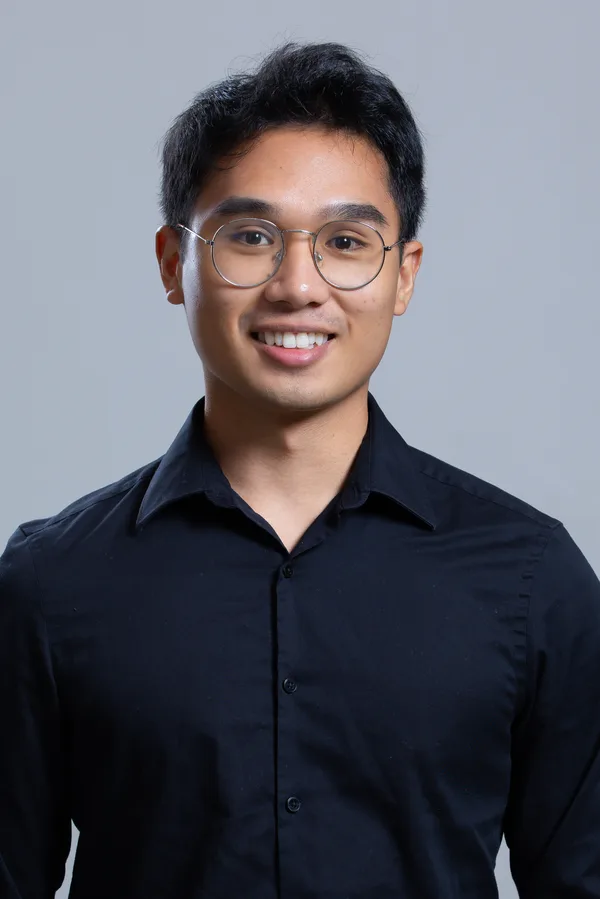
Joneil Caoile headshot
0+
Clinical hours
0
Engineering projects
0
Certifications
0
Engineering degrees

I got into this field because I believe the body already holds the answers, and good engineering helps people access them. Before I ever wrote a test protocol, I spent two years in clinics watching what happens when a device meets a real patient. That changed how I think about everything: proving it works isn't just a checkbox, and proving it's usable isn't just a study. It's the difference between a device that sits on a shelf and one that actually helps someone heal.

Clinical observation
400+ hrs
Projects
11 built
Regulatory
IEC 62366, 21 CFR 820, MDR
Degree
M.S. BME · 3.9 GPA
Tools built
UseTrace HFE, PhotoCull AI

Four skill sets. One engineer.

Validation & Quality

Draft V&V protocols and risk-based test strategies anchored to ISO 14971 and FDA 21 CFR 820. Build traceability from user needs to test cases. Document deviations, failure modes, and mitigations with the same rigor I expect from a release protocol.

See: Pneumothorax Monitor (capstone V&V, bench-tested), UseTrace (classification validation against IEC 62366-1), IRB Protocol (structured study design under Common Rule)

Applications & Field Support

Translate engineering constraints into workflows a clinician can follow without a manual. 400+ hours in PT clinics means I can sit across from a clinician, speak their language, and bring real use-context back to the engineers. Training materials, onboarding flows, feedback loops back to R&D. Field-ready, open to 30-50% travel.

See: Pneumothorax Monitor (clinician-facing workflow for air-leak trending), UseTrace (training guides, observation-to-finding flows), PhysioRep (rep counting UX for a self-guided session)

R&D & Prototyping

Sensor selection, signal chain, characterization. Signal processing pipelines (filtering, feature extraction, classification). I iterate in MATLAB and Python simulation first, then move to bench. Honest about the line between sim and shipped hardware.

See: Pneumothorax Monitor (dual-flow sensor selection, volume-delta logic, bench characterization), EMG Cuff (4-8 Hz tremor isolation, Python simulation), Biofeedback Study (motion-cap pipeline), Heart Disease ML (interpretable LogReg, ROC-AUC 0.94, coefficients tied to clinical risk factors)

Human Factors & Usability

Formative usability studies (capstone + coursework), use-error classification under IEC 62366-1, and use-specification writing. 400+ hours of clinical observation watching real users meet real devices. The hardest part of HFE is noticing what people do instead of what they say. I noticed.

See: UseTrace (AI-assisted IEC 62366 observation classification), HFE sample report (use-specification, use-error analysis, risk controls)

Two years in clinics before a single line of code.

400+ hours sitting in clinics, watching patients reach for devices that weren't designed with them in mind. I kept noticing the same thing: the gap between what engineers intended and what people actually experienced. That gap is where harm lives. And nobody in the room seemed to own it.

I wanted to be the person who owns it. Stevens gave me the engineering language: design verification, usability evaluation, regulatory strategy. And when I realized how much time engineers lose to paperwork instead of real testing, I built UseTrace HFE, a tool that classifies safety observations under IEC 62366-1 automatically.

Two years watching the problem. Then grad school to fix it. Now I'm ready to do it for real.

Clinics
400+ hrs
Stevens M.S.
Building
Ready
M.S. Biomedical Engineering B.S. Kinesiology, Cum Laude Provost Scholarship 3.9 GPA 400+ Clinical Hours

Ten more projects. Zero fluff.

🎯
Motion Cap
🔊
Audio Cue
🦵
Knee Align
RARE Biofeedback / HFE

Biofeedback Rehab Study

Motion-capture study testing real-time audio feedback to improve knee alignment during Taekwondo kicks. Led a 4-person team through study design, test execution, and data analysis. Essentially usability testing for a biofeedback system.

3 athletes · 15 kick trials · Validated audio feedback against ground-truth motion data
Human FactorsR&DValidation
OptiTrack motion capture · EMG + joint-angle analysis in MATLAB · Max/MSP audio feedback system
MATLAB OptiTrack Max/MSP Usability Testing
💪
EMG Signal
📈
4-8 Hz Filter
🎯
Suppress Tremor
RARE Wearable / Simulation

EMG Tremor-Suppression Cuff

Wearable electromyography concept that detects voluntary hand movement and suppresses Parkinsonian tremor via pneumatic actuation. Full Python simulation built from scratch.

Isolated 4-8 Hz tremor band from voluntary signal · Simulated 70%+ tremor reduction
R&DHuman Factors
4-8 Hz tremor band filtering · Full Python simulation (NumPy/SciPy) · Pneumatic actuation concept
EMG Processing Control Systems Python Class II Device Concept
📋
Qualtrics
🧮
Krippendorff α
Flag Items
RARE Clinical Research / V&V

Fall Study Reliability Tool

Clinician-facing reliability tool for a fall-risk assessment study. Cleaned and merged a 77-patient Qualtrics survey into a SQLite database, then computed inter-rater reliability (Krippendorff's Alpha, percent agreement) so researchers could flag unreliable items before finalizing the instrument.

77-patient clinical survey · Inter-rater reliability computed per item, not just globally
ValidationApplications
Krippendorff's Alpha reliability · Python ETL · SQLite persistence · Clinician-facing dashboard
Python SQLite Inter-Rater Reliability V&V Methods
🏥
MIMIC-III
📊
Stats Tests
📈
Honest Result
RARE Biostatistics / Clinical Research

BMI and ICU Recovery: Biostats Study

Retrospective analysis of whether BMI predicts ICU length of stay after cardiac surgery. Built the cohort from the MIMIC-III clinical database using ICD-9 codes, ran Spearman correlation, Chi-square, and Kruskal-Wallis tests, and reported the honest non-significant result rather than forcing a story.

MIMIC-III cohort (n=31) · Spearman ρ = −0.196, p = 0.291 · No statistically significant association
R&DValidation
Cohort construction from MIMIC-III · Assumption checking (Shapiro-Wilk, Levene) · Non-parametric fallback (Kruskal-Wallis) · Reproducible analysis in Python and R
Python R MIMIC-III Biostatistics
🫀
UCI Cleveland
🧮
LogReg
📈
ROC 0.94
RARE Machine Learning / Clinical Decision Support

Heart Disease Prediction with Logistic Regression

Comparative ML study on the UCI Heart Disease dataset (303 patients). Owned the Logistic Regression model and Background section in a 4-person team. Coefficients tied directly to documented coronary artery disease risk factors, which is the part that sells in a clinical setting.

5-fold CV ROC-AUC 0.911 · Holdout ROC-AUC 0.939 · Top coefficients aligned with clinical literature
R&DValidation
Shared sklearn Pipeline (impute + scale) · Stratified 5-fold CV · 80/20 holdout · Coefficient inspection vs. black-box feature importance
Python scikit-learn Logistic Regression UCI Heart Disease
📋
Aims + Hypothesis
🛡️
SONA + Consent
📊
Stratified OR
RARE Clinical Research / IRB Protocol Design

Nanomedicine Awareness IRB Protocol

Cross-sectional IRB protocol for a Stevens student survey on awareness and perceptions of nanomedicine cancer therapies. Owned Specific Aims, Recruitment, and Eligibility sections in a 4-person team. Anonymous, minimal-risk, SONA + Qualtrics, with stratified subgroup analysis built into the design.

Full IRB protocol delivered · Self-screen advisory replaces clinical exclusion · STEM vs non-STEM stratified hypothesis
ValidationR&D
Common Rule (45 CFR 46) framing · SONA Subject Pool recruitment · 7-pt Likert perception items · Odds Ratio analysis on 2x2 contingency tables
IRB Protocol SONA Qualtrics Cross-Sectional Design
🦴
Native ACL
🧬
Composite
💪
Long-Term
RARE Biomaterials / Design Concept

Artificial ACL Graft: Biomaterials Design

Design concept for a multilayer composite ACL graft that addresses why current synthetic grafts still produce 62% early osteoarthritis at 10-15 years. UHMWPE braided core for strength, PCL tie-layer for stress-shielding, electrospun collagen/PLGA sheath for cell adhesion, gradient porosity for vascularization, and 3D-printed porous bone-fixation ends.

Biomimetic multilayer concept · Mechanical, biological, and integration requirements worked end to end
R&DValidation
UHMWPE + PCL + collagen/PLGA composite · RGD surface functionalization · 3D-printed porous ends · Literature-grounded against Murray & Fleming (2013), Woo et al. (2006)
Biomaterials Composites Electrospinning Design Controls
🖼️
Raw Photos
🔬
10-Dim Scoring
Quality Rank
EPIC CV / ML

PhotoCull AI

Free, local-only photo quality scorer. Analyzes sharpness, faces, duplicates, and composition across 10 dimensions. Built it because I got tired of paying $10/month for Aftershoot.

10-dimension scoring model · 100% client-side, zero data leaves the browser
R&DApplications
2,754 lines · ML model trained with differential evolution + 5-fold cross-validation
JavaScript TensorFlow.js Client-side ML Open source
🧍
Pose Detect
🦴
Joint Track
Form Coach
EPIC PWA / Pose Estimation

PhysioRep

Free progressive web app that uses pose estimation to coach exercise form in real time. Gamified PT exercises because I saw patients skip rehab when it got boring. Full circle from those clinics.

v1.0 deployed · Real user feedback collected · Works offline via Service Worker
Human FactorsApplications
Single-file PWA · MediaPipe Pose estimation · Gamified exercise tracking
TensorFlow.js MediaPipe PWA Service Workers
📋
Task Analysis
🤖
Auto-Classify
📄
HFE Report
★ LEGENDARY HFE / Regulatory Tool

UseTrace HFE

AI-powered tool that automates the worst parts of HFE documentation: task analysis tables, use error categorization under IEC 62366-1, and simulated-use protocol generation. Built to attack the formatting and traceability grunt work that slows HFE submissions, not the engineering judgment.

Turns weeks of manual HFE formatting into hours · Engineer stays in control of all judgment calls
ValidationHuman FactorsApplications
Python CLI tool · IEC 62366-1 taxonomy · Inter-rater reliability metrics · Research prototype
Python IEC 62366-1 FDA 510(k) NLP

What I work with.

Domain
Capabilities
Standards / Tools
Depth
Testing & Validation
V&V protocols, test methods, risk-based strategies, traceability
IEC 62366-1, FDA 21 CFR 820, EU MDR
Capstone V&V package + 6 project V&V cycles
Regulatory & Quality
Design controls, risk management, documentation rigor
FDA 510(k), ISO 14971, ISO 13485
Capstone risk file + 4 coursework projects
Design & Human Factors
Usability studies, use-error classification, HFE reports
IEC 62366-1, ISO 9241, FDA HFE Guidance
400+ clinical hrs + UseTrace prototype
Software
Web apps, data pipelines, client-side ML, APIs
JavaScript, Python, TensorFlow.js, Firebase, Git
Multiple production apps
Machine Learning
Classification, cross-validation, signal processing
TensorFlow, scikit-learn, pandas, MATLAB
Coursework + PhotoCull ML

From clinics to code.

The human body already knows how to heal. That idea pulled me in and never let go. I wanted to be the person who helped unlock it. I studied the science, watched recovery happen up close, and somewhere in those clinic hours realized I loved understanding the body more than I loved treating it. Biomedical engineering let me keep the wonder and build something with it: devices that reach further, serve more people, and hold themselves to a higher standard of safety.

2017 - 2020
Cal State Long Beach
B.S. Kinesiology · Cum Laude
Studied how the body moves and heals itself. Got hooked on the science of human recovery.
2020 - 2024
Clinical Observation
400+ hours in PT clinics
Loved the science, but the day-to-day wasn't the right fit. Saw where devices failed patients and knew I wanted to fix that from the engineering side.
2025 - 2026
Stevens Institute of Technology
M.S. Biomedical Engineering · GPA 3.9 · Provost Scholarship
Finally had the engineering language for everything I'd been watching. Built 11 projects, learned the full lifecycle.
May 2026
Ready
★ Available Now ★
The wonder that pulled me into kinesiology never left. Now I have the tools to do something with it.
Class Tree
My BME career path, RPG-style. Each branch is a role I'm qualified for.
Novice
BME Graduate
Acolyte
Validation Engineer
2nd Job
Sr. V&V Engineer
Sage
Applications Engineer
2nd Job
Sr. Field Apps
Blacksmith
R&D Engineer
2nd Job
Principal R&D
Creator
Human Factors Engineer
2nd Job
HFE Lead

Skills across projects.

Skill Pneumothorax UseTrace PhotoCull EMG Biofeedback Fall Risk Biostats Biomaterials PhysioRep Heart ML IRB
Python
MATLAB
Signal Processing
Computer Vision
Machine Learning
FDA Design Controls
IEC 62366-1
ISO 14971
V&V Protocols
Usability Testing
React / JavaScript
Statistical Analysis

Fujifilm X-T5

Mood-driven photography. XF 33mm f/1.4, soft highlights, analog character. Built PhotoCull because I got tired of paying to cull my own shots.

Gamer

Valorant, Tekken, Clash Royale. Games sharpen the same skills engineering does. Pattern recognition, frame-level focus, knowing when to commit.

E-Bike Commuter

Lectric XP 4.0. Daily driver, minimalist gear philosophy, maximum efficiency.

Coffee-Powered

Strong opinions about test protocols. Even stronger opinions about pour-over ratios.

SoCal Native

Grew up in Carson/Torrance. Came to Jersey City for my masters. Heading home after graduation. If your office is between Long Beach and Irvine, even better.

Music & Focus

Lofi beats for deep work, Filipino OPM for vibes. The right playlist is a productivity multiplier.

What I'm looking for.

01

The product touches patients.

Devices, diagnostics, therapeutics. Something a clinician trusts or a patient lives with. SaaS dashboards don't make this list.

02

Physical testing is part of the job.

Bench, fixture, protocol, witness signature. AI can draft a document. It can't run a pull test or watch a user fumble a syringe.

03

Regulated enough to matter.

FDA 21 CFR 820, ISO 13485, IEC 62366, 14971. Regulation means the work has stakes and the documentation matters.

04

Engineers have signature authority.

If a validation engineer can't release a protocol without three rounds of legal, something's broken. I want ownership with real consequences.

05

SoCal, market-rate comp.

Long Beach to Irvine is the sweet spot. Remote-friendly works. I expect competitive compensation for an M.S. engineer in this market.

06

The team tells the truth about tradeoffs.

Every device has compromises. Teams that can name them in a one-on-one are the ones worth joining. Teams that can't are the ones that get warning letters.

If this list describes your company, my resume is one click away. If it describes half your company and you're working on the other half, I want to hear about that too.

Available now.
Let's talk.

Role fit: Validation-deepest, with applications, R&D, and human factors as adjacent tracks. Also open to clinical specialist and field roles, plus rehab tech and digital therapeutics, my BME thesis domain (gamified physical therapy engagement). Location: Torrance, CA · open Long Beach to Irvine, remote works. Start: immediate.

Device testing, usability studies, regulatory documentation, tools that help your team move faster. If your team builds devices that reach patients, that's where I want to be.

Lv.27 Egg
0 / 2,026 XP